November 10, 2026
Building Better Tools: A Guide to Responsible AI Use for Working Adults
By @myresponsibleaiuseview
Why Responsible AI Use Matters Now
Artificial intelligence has moved beyond research labs and tech giant headquarters. Today, generative AI tools are available to anyone with an internet connection. This shift brings real opportunities for working adults who want to automate routine tasks, generate ideas, or create content more quickly. But with easy access comes the need for thoughtful judgment. Using AI without understanding its limits can lead to wasted time, poor results, or even reputational harm. That is why learning how to apply responsible AI use in everyday work is becoming a practical skill, not just an ethical ideal.
Generative AI systems, including the large language models that power popular chatbots and content generators, work by predicting the next likely word or image based on patterns in their training data. They do not "know" facts in the human sense. They do not check sources for accuracy. They do not understand context the way a colleague would. These limitations are not flaws in the technology so much as features of how it was built. Knowing them helps you set realistic expectations and avoid costly mistakes.
What Generative AI Can and Cannot Do
A practical starting point is to recognise what generative AI handles well. It can draft emails, summarise long documents, brainstorm ideas, and even generate code snippets. For a working adult who needs to produce a first draft of a report or create a quick presentation outline, generative AI can cut hours off the process. The key word is "draft", the output is a starting point, not a finished product.
What generative AI cannot do is verify facts, understand your company's specific policies, or replicate your personal judgment. It may produce confident-sounding answers that are factually incorrect or subtly biased. Researchers call these "hallucinations." For example, an AI might invent a citation from a real journal but give the wrong volume number or author initials. If you paste that into a client-facing document without checking, you pass along a mistake that looks sloppy at best and deceptive at worst.
Common Pitfalls in Everyday Use
One common pitfall is treating AI output as authoritative. Just because a response reads fluently does not mean it is correct. Another is sharing sensitive information. Many public AI tools store and use the data you feed them. If you paste customer lists, financial data, or internal strategy documents into a free chatbot, that information may become part of the model's training set or be visible to the service provider. A third pitfall is over-reliance: using AI to skip thinking through a problem yourself. The tool can suggest answers, but you still need to evaluate them against your own knowledge and your organisation's standards.

Practical Steps for Responsible AI Use
Adopting responsible AI use means building habits that protect your work and your reputation. It does not require deep technical knowledge. It does require attention to a few key practices.
Verify before you rely. Treat every AI output as a draft that needs human review. Check facts against reliable sources. If the AI claims a statistic exists, find the original source. If it writes code, test it in a safe environment before deploying it. This step alone prevents most of the common problems people encounter.
Keep personal and proprietary data out. Assume that anything you type into a public AI tool can be read by others. Use generic placeholders for names, amounts, and dates. If your organisation has a private instance of a model, use that instead. If not, ask your IT team about approved tools that offer data protection.
Know the model's limits. Each generative AI tool has a context window, the amount of text it can consider at once. If you feed it a long document and ask for a summary, it may only see part of the text. Also, most models have a knowledge cutoff date. They do not know about events that happened after their last training update. Check the model's documentation so you know what it does not know.
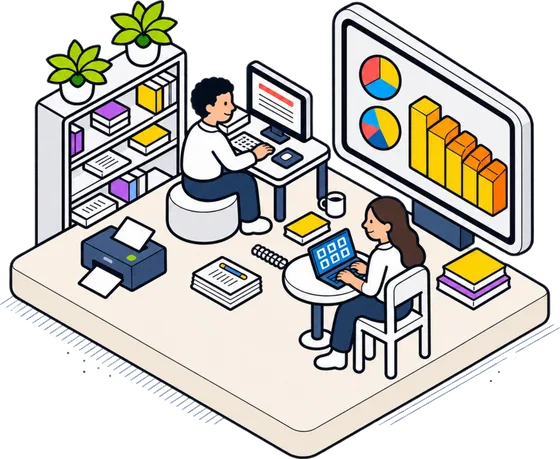
Use AI as a collaborator, not a replacement. Let the tool handle repetitive tasks like formatting or rephrasing. You handle the parts that require judgment: deciding what is relevant, what tone fits the audience, and what information is safe to share. This split keeps you in control while saving time.
Building Your Own Simple AI Tools
For working adults who want to go beyond using existing chatbots, there are now courses that teach non-coders how to build simple generative AI applications. These programmes typically cover how to connect a language model to a user interface, how to write prompts that produce consistent results, and how to test the app before sharing it with others. The goal is not to become a professional developer but to create small tools that solve specific problems at work, for example, a form that drafts replies to common customer questions or a tool that turns meeting notes into action items.
When building such an app, the same principles of responsible AI use apply. You decide what data the app can access. You test it with real inputs to catch errors. You document its limits so that users know not to trust it blindly. A well-built tool is transparent about what it can and cannot do. It might include a note at the bottom: "This is an AI draft. Please verify before sending." That simple line can prevent misunderstandings.
Trade-offs and Judgment Calls
There is no single rule that covers every situation. Sometimes you need speed more than precision, a quick draft for internal brainstorming does not need the same level of verification as a proposal for a client. Other times, accuracy is everything. Learning to make that call is part of developing good judgment with AI.
Another trade-off involves privacy versus convenience. A public tool may be free and easy to use, but it offers no guarantee about your data. A private instance might require more effort to set up but keeps your information within your organisation. Which one you choose depends on the sensitivity of the task. For a routine email, the free tool may be fine. For a document containing trade secrets, the private option is the only responsible choice.
Moving Forward with Confidence
Generative AI is not a passing trend. It is becoming a standard part of how many people work. The difference between using it poorly and using it well comes down to awareness and a few consistent habits. By verifying outputs, protecting sensitive data, understanding each tool's limits, and keeping the human in the loop, you can get real value from AI without introducing unnecessary risk. Responsible AI use is not about slowing down, it is about working smarter while staying in control.
❧